
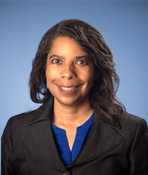
No Comments on LBA Member Profile: Deborah Divis, MLIS, AHIP 32
Deborah Divis, MLIS, AHIP
Associate Professor, Health Sciences Librarian
University Libraries
Creighton University
Editor’s note: This month, we are celebrating Deborah Divis, who has served as a Doody’s Core Titles Librarian Selector since 2023 and joined our Library Board of Advisors in 2026. Thank you, Deborah!
Provide a brief description of your library and its services, and your role within it.
Creighton University Libraries, steeped in a Jesuit, Ignatian mission, serves undergraduate, graduate, professional, and continuing education students, both on-campus and distance, from our main campus library in Omaha, a health sciences library at our Phoenix campus, and a law library on the Omaha campus. We have over one million physical and electronic items and offer fantastic services through our Emerging Technologies Lab, Makerspace, University Archives/Rare Book Room and more. As an offshoot, our University Librarian also heads Creighton’s Institute for Adaptive Intelligence. As a health sciences liaison librarian and associate professor in our main library in Omaha, I cover research, instruction, and collection development for students, faculty, and staff in areas such as pharmacy, obstetrics and gynecology, pediatrics, exercise science, integrative health and wellness. My role also currently involves curricular committee work, outreach, and representing Creighton University Libraries through the university’s Faculty and Academic Councils.
How did you get started in health sciences librarianship? What brought you to the profession?
As an undergraduate library student, I interned at a university law library in Texas, but I wanted to become a parochial school librarian. I landed a position heading a PreK-12 college preparatory academy library with the charge of shepherding the library staff and school through accreditation and as a faculty member teaching technology applications to students on the distinguished diploma track. A condition of the job was obtaining a master’s degree within 1-2 years. With my MLIS in hand, I concurrently taught college students library instruction at night. I brought the insight of what college students need to my high school instruction and the insight of where students are coming from into my college instruction. After moving to Nebraska, it was these experiences, and past work in pharmacies, that opened the door for me at UNMC’s McGoogan Library. I am grateful for learning much about medical librarianship there which I carry through my career.
Share two of the most important issues facing the profession today and why they’re important to address.
First issue: Underestimated ROI. There will be fewer library and librarian cuts across institutions if administrators fully understand the breadth and depth of how librarians and well-trained staff contribute to the health and success of their organizations, patients, researchers, students, and communities. In tandem thought, many librarians do more than support patrons; they are researchers and published authors who advance the science of information. That knowledge transfers into the success of all stakeholders.
Second issue: Helping our patrons combat cognitive overload and cut through the noise of suboptimal sources. The constant expectation of staring at screens for every moment of work and study, combined with ingrained habits at staring at screens for recreation in ‘off-hours’ has steadily increased a bombardment of information that outpaces the evolution of our brains. Advances in technology and marketing shape the content we face, be it factual or not, knowing that human nature leans towards the path of least resistance. Sometimes this manifests into ill-informed medical or mental health advice and perpetuated myths not only in the average consumer, but in research where misinformation can be cited repeatedly. In short, the age-old information literacy task is getting more challenging.
What is one innovation, product, or service in your library that you’re excited about?
Only one? If I have to choose, it is our subscription to PolicyMap which we have had for a few years now. I love sharing how powerful and versatile this resource is regarding just about everything you can imagine for so many purposes from personal to educational and beyond. The Population Health components really help visualize challenges and opportunities right down to census blocks. As a bonus, users can upload their own data to create maps to use in their research or other endeavors. I learn something new about its capabilities all the time. Between its mapping capabilities, reports and trend visualizations, I can’t say enough about what an incredible advantage this tool can be for all our patrons.
What aspects of your work keep you most professionally motivated?
Everything we do as health sciences librarians is for the exponential good, whether we are assisting students, staff, faculty, clinicians, researchers, administrators, or each other in our profession. Our work touches more lives than we will ever know as our patrons discern and use health information that advances society.
Why do you serve as DCT Librarian Selector and member of the Library Board of Advisors?
This is good and important work. I understand what it is like to be a solo college and hospital librarian, part of a small health sciences librarian team with a lean budget, and part of larger teams whether with challenged or healthy budgets. Despite the dynamic and sometimes volatile nature of our discipline, one thing stays static in every environment and that is the need for quality, trustworthy resources that provide value to constituents. Doody’s cuts through the noise to help librarians around the world make informed, smart decisions that match the needs of their institutions. It’s an honor to serve on the LBA by seeing around corners and steering insight toward where health professions are heading.
A recent book you’ve enjoyed or anything else you’d like to share?
The last fictional book that I liked is Remarkably Bright Creatures, which is so much more enjoyable than the movie adaptation. It’s one of the few books that I have knocked out in a weekend. However, I love reading about chefs and food. I recommend 32 Yolks: From My Mother’s Table to Working the Line by Eric Ripert with Veronica Chambers and my all-time favorite combination of wild and fantastic recipes, the 1958 edition of the Culinary Arts Institute Encyclopedic Cookbook, edited by Ruth Berolzheimer. I still use my father’s well-worn copy along with one in better condition.

Leave a comment