

No Comments on A Review of Osmosis 140
Sarah E. Keil, MLS, MA
Assistant Professor, Research & Learning Services Librarian for Medicine
Assistant Professor, Department of Health Systems Science
Medical Library, Thomas F. Frist, Jr. College of Medicine
Belmont University
Introduction
Osmosis is a teaching and learning platform for medical, nursing, and other healthcare students. The platform focuses on visual learning and exam preparation, primarily through educational videos and self-assessment materials. Based on evidence-based educational tools, Osmosis is useful for individual review as well as flipped classroom-style instruction. Originally founded by two Johns Hopkins medical students in 2011 to support classmates, the product was acquired by Elsevier in 2021 (Carrese, 2023).
This review focuses on the content available through the Osmosis Medical (MD) institutional subscription.
Content
The purpose of Osmosis is to help students learn complex healthcare topics more efficiently and retain information longer. Osmosis simplifies difficult medical concepts through plain language white-board style educational videos, thorough notes for deep dives into content, board-style questions, and flashcards. Available to use in a web browser or as an app, Osmosis is highly interactive and user-friendly, particularly due to the integration of Osmosis AI.
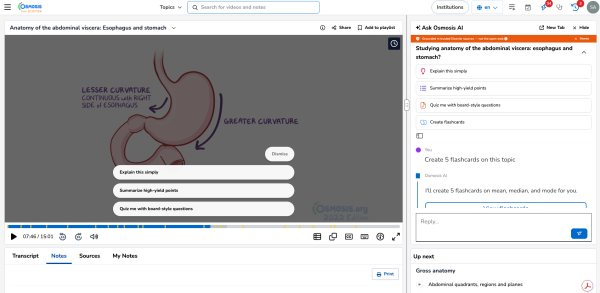
Image 1: Screenshot of the video screen with Osmosis AI integration. On the left side of the screen, a video is in progress. When Osmosis AI is active on the right side of the screen, users can click to pause the video, and a menu of AI offerings populates to provide useful learning support. Osmosis AI can also be hidden for a dedicated video view. Credit: Elsevier
Osmosis covers the basic sciences and clinical sciences in depth. Content areas covered for the basic sciences includes foundational sciences, such as anatomy, genetics, and pharmacology; organ systems, such as the immune system and respiratory system; and USMLE® Step 1 Review areas, such as biostatistics and behavioral health. Clinical sciences content includes material for each clerkship specialty area as well as USMLE® Step 2 Review. Additional specialty areas also covered include pathophysiology and nursing and allied health topics. New content is continually added; health systems science videos, for instance, are coming soon.
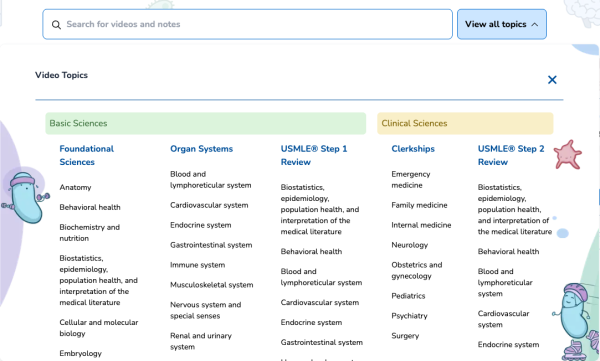
Image 2: screenshot of simple search box and a portion of the video topics. Credit: Elsevier
Content is cited and supported via materials available from other Elsevier platforms, namely textbooks on ClinicalKey Student and anatomy models from Complete Anatomy. Osmosis relies on evidence-based learning strategies such as active recall and spaced repetition and offers a personalized structure to help students implement their content through study schedules, curated playlists, and AI-assisted learning support (Elsevier, 2026a).
Osmosis complements traditional learning materials, such as textbooks, lectures, and databases, in a multimedia learning platform that is visually rich and highly supportive of training students to become clinicians. Exam preparation content is targeted towards board examinations but can also be utilized for course-based assessments (Elsevier, 2026a).
Students in medical and healthcare programs are the target audience for Osmosis, along with faculty, staff, and administrators working in those environments. Additionally, Osmosis could be useful for other students in pre-health programs, residents, fellows, and practicing clinicians. Additionally, Osmosis’ focus on plain language videos may make this a useful resource for patients, caregivers, and lifelong learners.
Osmosis content is developed by a team of medical, nursing, and healthcare professionals and reviewed by an editorial board and more than 100 healthcare experts (Elsevier, n.d.).
Features/Functionality
The clean, modern Osmosis interface provides intuitive access to key features, including a basic search for videos and notes, as well as access to study features including the study schedule, assessments, and recommended daily practice and videos. Searching on the Osmosis platform is straightforward, with a basic keyword search and filtering by basic or clinical sciences.
Additionally, users can browse to access videos and notes on their desired topic. While federated searches are unavailable across all resources, relevant content from various Elsevier platforms is linked and cited for further study.
Study features are intuitive to create and utilize, and the platform offers helpful reminders to engage with the content on a recommended, evidence-based schedule. Continued use of the platform leads to increased personalization and relevance for study and exam preparation.
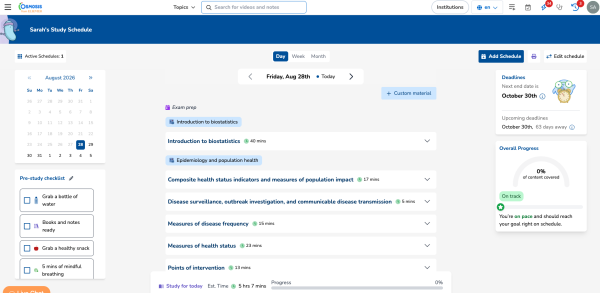
Image 3: screenshot of the full personalized study schedule feature. Credit: Elsevier.
New in 2026 is Osmosis AI. Built directly on the platform, it connects users with evidence-based explanations and citations via Osmosis videos and other Elsevier sources, including ClinicalKey Student and Complete Anatomy. Subscriptions are required for each tool. Osmosis AI is helpful for both students and educators. Students can use the AI features to further personalize their learning experience and study more efficiently. Osmosis AI is also helpful for educators as they create lesson plans, write cases, and suggest resources to support student learning (Elsevier, 2026b).
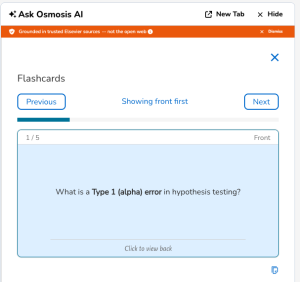
Image 4: screenshot of a flashcard generated by Osmosis AI. Credit: Elsevier
As a whole, the Osmosis platform is outstanding. It is strong for providing a foundational understanding of a topic, particularly through a visual format. Students will find the videos incredibly useful in supporting their learning, both as pre-work before a lecture or for review before a quiz. The evidence-based approach to individual study is unique, easy to adopt for students, and
offers a variety of tools and approaches for various learning types. Once students take the time to set up desired features, such as a study schedule, assessment, or video playlist, the use of the platform is fairly hands-off, and students can focus on learning and studying. Other strengths include coverage for a variety of health professions, integration with other Elsevier resources (separate subscriptions are required to fully utilize these features), and the new AI content that is grounded in Elsevier’s published materials, not the open web.
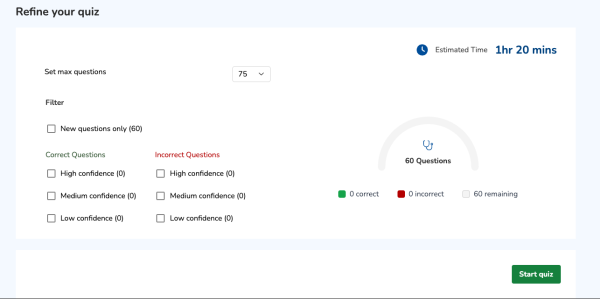
Image 5: screenshot of the second step of setting up a quiz in the question bank. Many options are available to refine the user experience and view as material is reviewed. Credit: Elsevier
Despite these strengths, Osmosis may have some limitation for students and educators. Students, particularly later in their educational journey, may find some materials to be too simplified. For instance, a dedicated question bank such as those offered by UWorld Medical or AMBOSS may be more comprehensive. Educators may find that the siloed content of the videos and structure of the platform to have alignment issues with curriculum at their institution. Librarians may find that the platform does not contain enough content to teach all areas of evidence-based medicine. Additionally, Osmosis does not contain full-text research literature or textbooks, only links or citations to external Elsevier content.
Business Model
Osmosis is available to license through both individual subscriptions and institutional licenses. Individual subscriptions are available for program-specific plans, including Medicine (both MD and DO), Nursing (RN, NP, LPN), Physician Assistant, Pharmacy, Dental, and Allied Health. Pricing for individual subscriptions varies based on the plan length (Elsevier, 2026c). Cohort-based subscription models are available for institutional license on a negotiated basis (Elsevier, 2025).
Institutional subscriptions include access to the Osmosis Admin Analytics portal, which allows faculty and administrative users to monitor usage. Usage data track individuals’ use of the platform including number of videos viewed, questions answered, and flashcards answered, as well as number and dates of sessions utilizing Osmosis. These data are also available in aggregate form for the cohort as a whole (Elsevier, 2025).
Breakthrough
Osmosis is a valuable learning and comprehension tool for medical and health sciences education. At its core, Osmosis combines high-quality, concise educational content with evidence-based learning techniques to help learners understand complex concepts. By utilizing active learning methods, students can stay engaged and enhance their knowledge. Osmosis serves as a valuable supplement to traditional educational resources and integrates with other Elsevier resources seamlessly. Integrated AI features enhance the value of the product.
Medical and health sciences libraries of all types should consider subscribing to Osmosis. Content is aligned with both coursework and board exam preparation for a variety of licensed specialties. Osmosis can appeal to a variety of learning styles via the various forms of content and active learning tools available. Faculty and librarians also benefit from Osmosis through the ability to use the resources in flipped-learning environments or to enhance their own understanding of the material. While Osmosis is a highly engaging and user-friendly platform, the content is not unique — only the formatting is. Therefore, budget conscious libraries may need to prioritize other types of resources. Nonetheless, Osmosis excels at making complex topics accessible and fills an important role for student success.
References
Carrese, M. (Executive Producer). (2023, April 13). Osmosis.org co-founder & CEO relies on his own learning platform for return to med school (No. 371) [Audio podcast episode]. In Raise the line podcast. Elsevier Health. https://www.osmosis.org/podcast/ceo-relies-on-his-own-learning-system-shiv-gaglani-osmosis
Elsevier. (n.d.). Meet the Osmosis editorial board. Osmosis from Elsevier. https://www.osmosis.org/editorial-board
Elsevier. (2025). Illustrated video explainers for teaching students. Osmosis from Elsevier. https://educators.osmosis.org/
Elsevier. (2026a). Learning medicine made simple. Osmosis from Elsevier. https://www.elsevier.com/products/osmosis
Elsevier. (2026b). Osmosis AI. Osmosis from Elsevier. https://www.osmosis.org/features/osmosis-ai
Elsevier. (2026c). Plans for med students. Osmosis from Elsevier. https://www.osmosis.org/plans/MD

Leave a comment