
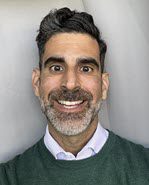
No Comments on DSTL List Selector Profile: Jorge E. Perez 84
Jorge E. Perez
Emerging Technologies Librarian
Louis Calder Memorial Library
University of Miami Miller School of Medicine
Editor’s Note: This month, we are celebrating Jorge Perez, who served as List Selector for the April 2025 Doody’s Special Topics List on LGBTQ+ Health. Thank you, Jorge!
Provide a brief description of your library and its services, and your role within it.
The Calder Memorial Library supports the faculty and students at the Miller School of Medicine at the University of Miami, as well as the staff of the Jackson Memorial Hospital System. As the Emerging Technologies Librarian within the Technical Services department, I oversee the maintenance and enhancement of the library website and ensure seamless access to databases, ebooks, and other digital resources. I also stay current with emerging technologies and research tools to identify and implement solutions that best serve our academic and clinical communities.
How did you get started in health sciences librarianship? What brought you to the profession?
After more than 10 years working in academic libraries as a general librarian, and without a background in the health sciences, I pursued a position as a university medical librarian that did not require prior medical experience. I was drawn to the position because it offered the opportunity to apply creativity in web design and leverage emerging technologies in meaningful ways. My first assignment was to revise and update a series of medical library video tutorials embedded in a medical research course. As I edited and reviewed the content, I gradually learned the terminology and built the foundational knowledge that shaped my expertise in health sciences librarianship. I remain deeply grateful for that opportunity, especially knowing that many medical librarian positions typically require prior experience in the field.
Share two of the most important issues facing the profession today and why are they important to address?
Artificial Intelligence (AI) remains an ongoing conversation, generating both concern and excitement about how it can be ethically integrated into our daily work. My primary interests are twofold: understanding how users’ research behaviors and methodologies may evolve and examining how library resources and services must adapt to meet these emerging needs. We are at a pivotal moment in which technology will profoundly shape how our profession delivers services, provides access to information, and supports research and discovery across our academic and clinical communities.
What is one innovation, product, or service in your library that you’re excited about?
Complementary and Alternative Medicine (CAM) has become increasingly prominent in public awareness, and healthcare professionals are likely to encounter more patient inquiries in this area. NatMed (formerly Natural Medicines) is an excellent resource for exploring evidence on supplements, herbal products, and therapies such as acupuncture. The database includes an Interaction Checker tool that helps determine whether drugs and supplements can be safely combined. Users can also search by condition or disease to review therapies, supplements, and herbs categorized as effective, possibly effective, ineffective, or requiring further research before conclusions can be drawn.
What aspects of your work keep you most professionally motivated?
I remain committed to enhancing how we serve our patrons by designing intuitive, user-centered online guides and thoughtfully curating our collections to support meaningful learning and research. My focus is not only on organizing information, but on structuring it in ways that reduce barriers to access, clarify complex topics, and anticipate the evolving needs of faculty, students, and clinical staff.
Why did you select for the LGBTQ+ Health Doody’s Special Topics List?
Coming out later in life as a gay man has profoundly shaped my professional commitment to advancing initiatives that support the health and well-being of the LGBTQ+ community. Extensive research consistently shows that LGBTQ+ patients often struggle to find culturally competent healthcare providers who are prepared to meet their needs effectively. Collaborating with committee colleagues to select this important list of titles strengthened my belief that thoughtfully developed collections can play a meaningful role in improving both medical education and clinical practice. I hope this list supports stronger collection development in LGBTQ+ health and helps medical professionals better understand and serve these communities. At the same time, the process highlighted a significant gap in literature, emphasizing the need for updated editions of foundational works and expanded scholarships in this critical area.
A recent book you’ve enjoyed or anything else you’d like to share.
Since we are discussing LGBTQ+ health, I highly recommend the film The Normal Heart, directed by Ryan Murphy, as well as the powerful series It’s a Sin and Pose. These three works offer deeply moving portrayals of the early HIV/AIDS crisis and the human stories behind it. I am currently reading the memoir Fairyland by Alysia Abbott, which I picked up after watching the film adaptation. She beautifully recounts coming of age in San Francisco with her gay father during a pivotal era in LGBTQ+ history.

Leave a comment