
No Comments on Librarian Reviewer Profile: Chana Kraus-Friedberg, PhD, MSLS, AHIP 61
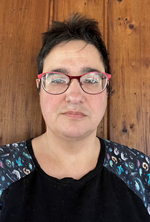
Chana Kraus-Friedberg, PhD, MSLS, AHIP
Health Sciences Librarian
Michigan State University Libraries
Editor’s Note: This month, we are celebrating Chana Kraus-Friedberg, who has served as a Doody’s book reviewer since 2022 and a DSTL List Selector in 2024. Thank you, Chana!
Provide a brief description of your library and its services, and your role within it.
I work at the Michigan State University (MSU) Libraries. MSU is a land-grant institution in Lansing, Michigan, with over 51,000 students in over 400 programs. The libraries work with and provide services to faculty, students, and staff to support the university’s teaching and research missions. As part of MSU’s land-grant mission, the libraries also serve Michigan residents more broadly. In my role as a health sciences librarian, I act as the liaison for the Master of Public Health program; the Department of Pharmacology and Toxicology; Lyman Briggs College, a residential college with a science and society focus; and medical residents in MSU programs in hospitals around the state of Michigan.
How did you get started in health sciences librarianship? What brought you to the profession?
When I went to library school, I had a librarian friend who worked at the health sciences library on campus. She encouraged me to apply for a graduate assistantship there, and despite my lack of a science background, I became really interested in the work the librarians did. I was especially interested in the things that health sciences librarians do that other academic librarians tend not to, such as advanced searching for clinicians and evidence synthesis and systematic reviews. At least this was true at the time. Now many non-health sciences librarians work on evidence synthesis as well. I got my current job after library school, and here I am almost a decade later!
Share two of the most important issues facing the profession today and why they’re important to address.
AI seems like the obvious answer, but it fits inside the larger issue of the public denigration of evidence-based thinking and the idea of evidence more generally. AI contributes to that, in that it’s a widely-used tool that often takes away our ability to directly identify or consult the evidence on which its statements are based. But there’s also increasing rhetoric telling people that the interests of power are the deciding factor in reality claims, regardless of what conclusions drawn from reliable evidence might say. This is a frightening prospect for anyone who works with information and research, particularly in the health sciences.
What is one innovation, product, or service in your library that you’re excited about?
I really like NatMed, which is a collection of point-of-care tools to use when patients are taking herbal supplements or other kinds of natural medicines. It has lookups for adverse effects, medicine interactions, effectiveness, and impact on pregnancy or lactation of various supplements. There’s also a lookup for which vitamins may be depleted by particular medicines, so that the doctor might want to recommend a supplement. When I show this to residents, they’re always really excited about it. Often they have patients who take supplements, and there’s really no other resource that offers so much useful information about them in one place.
What aspects of your work keep you most professionally motivated?
I love research consultations and reference interviews. Any time I’m able to help someone clarify what question they want to be asking or what they will need in order to start to answer it is exciting for me. I especially enjoy being able to demystify the research process for students. So many of them start out frustrated because they don’t know how to go about looking for what they need, and it’s rewarding to help them get past that to the part of the research where they are gathering or creating new knowledge.
Why do you review books with Doody’s?
I believe Doody’s is an essential resource for librarians who buy health sciences materials. There aren’t many places to find reviews of the kinds of materials we buy, and assessing the functional difference between multiple options on similar topics can be challenging. I also just enjoy the process of evaluating and reviewing new books. Over the years, reviewing for Doody’s has taught me a lot about how to consider a resource in light of different user groups’ needs, and that has helped me in my own collection practice as well.
A recent book you’ve enjoyed or anything else you’d like to share?
I just finished reading The Scientist Who Wasn’t There: A True Story of Staggering Deception by Joanne Briggs. I discovered it in our popular science collection!

Leave a comment