
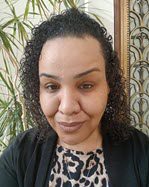
No Comments on Librarian Reviewer Profile: Aundria Parkman, MLIS 64
Aundria M. Parkman, MLIS
Research Support Librarian – Evidence Synthesis
Rudolph Matas Library of the Health Sciences
Tulane University
Editor’s Note: This month, we are celebrating Aundria Parkman, who has served as a book reviewer in library and information science since 2024. Thank you, Aundria!
Provide a brief description of your library and its services, and your role within it.
I work at the Rudolph Matas Library, located in downtown New Orleans, which serves as the health sciences library for Tulane University. We contribute to Tulane’s community through an extensive print and digital health sciences collection, research support, workshop and instruction programming, interlibrary loan, study spaces and reservable study rooms, and a systematic review service. In my role as Research Support Librarian for Evidence Synthesis, I work closely with students, faculty, and research teams to provide consultations on evidence synthesis, conduct in-depth literature searches for research teams, and deliver instructional offerings for classes and small groups on evidence synthesis methodologies. I also manage the library’s systematic review service, coordinating support for evidence synthesis projects from our team of research support librarians.
How did you get started in health sciences librarianship? What brought you to the profession?
I initially imagined my future in research within the field of health economics. That vision began to shift during my undergraduate years when I began working as a student employee with Tulane Libraries. What began as a campus job quickly became something far more meaningful. Through daily work in the library, I discovered a space devoted to curiosity, discovery, and helping others find the knowledge they need. I began pursuing graduate studies in librarianship and applied for a permanent position in interlibrary loan as a technician in our health sciences library. While enrolled in library school, I completed an internship with the Network of the National Library of Medicine’s National Center for Data Services. That training was transformative and solidified my commitment to the profession.
Share two of the most important issues facing the profession today and why they’re important to address.
One significant issue is the growing politicalization of the health sciences. Political influence is increasingly challenging long-standing norms surrounding the practice of health care. Legislative pressure, censorship, and regulatory changes are shaping the field, which in turn develop what is being taught, researched, and disseminated. Providing unrestricted access to information will position health sciences librarians as supporters of evidence-based practice independent from political control.
A second major issue is the growing importance of artificial intelligence in health sciences education. AI-augmented learning is no longer emerging; it is the new normal. Health sciences librarians must adapt by developing expertise in AI tools and incorporating AI literacy into their instruction. This includes not only teaching core competencies and how to effectively use these technologies but also emphasizing their ethical use in research and clinical contexts. In doing so, health sciences librarians play a key part in ensuring that future health researchers and professionals can navigate AI responsibly and competently.
What is one innovation, product, or service in your library that you’re excited about?
Right now, I am particularly excited about our new implementation of electronic search strategy peer-review. Our systematic review service has developed an internal peer-review system which has integrated PRESS guidelines for the peer-review of electronic search strategies into our workflows. In this model, every search strategy written for evidence synthesis by a Matas librarian is reviewed by another librarian within our organization. The goal is to foster a collaborative and synergistic environment for evidence synthesis where high standards are consistently upheld, and librarians learn from one another through shared processes of review and feedback. We are currently in the pilot phase, and I am confident that this model will work well for our systematic review service.
What aspects of your work keep you most professionally motivated?
I am most motivated by the work I do with students and residents. Their dedication and genuine desire to make an impact in the health and medical sciences are deeply inspiring to me. Working with budding researchers keeps my own passion for science and scholarship alive. The energy they bring to their inquisitive explorations continually renews my commitment to supporting access to information and reminds me why I fell in love with libraries in the first place. In my role, I have the privilege to be a teacher and mentor to them while working alongside them as a colleague in other facets. Contributing to their growth while participating in the research process makes my work deeply rewarding.
Why do you review books with Doody’s?
I review books with Doody’s Review Service because it provides a meaningful opportunity to engage in the field of health sciences librarianship. Serving as a reviewer contributes to my own professional development by expanding my knowledge through close engagement with newly published scholarship. At the same time, it allows me to share perspectives that help shape the collections of health sciences libraries and, ultimately, support the education and work of future generations of health sciences professionals and librarians.
A recent book you’ve enjoyed or anything else you’d like to share?
The last book I read was When Breath Becomes Air by Paul Kalanithi, which I discovered on the shelves of the medical humanities section at Matas. The memoir reflects on some of the most profound themes we encounter: time, life, and death. Kalanithi writes from the pivotal moment at the end of his neurosurgery residency at Stanford University, when he was newly diagnosed with lung cancer at the age of 36. He offers a powerful reminder of the human experiences that are fundamental in medicine. It’s a must read for those in the health sciences, but the story is relevant to anyone.

Leave a comment